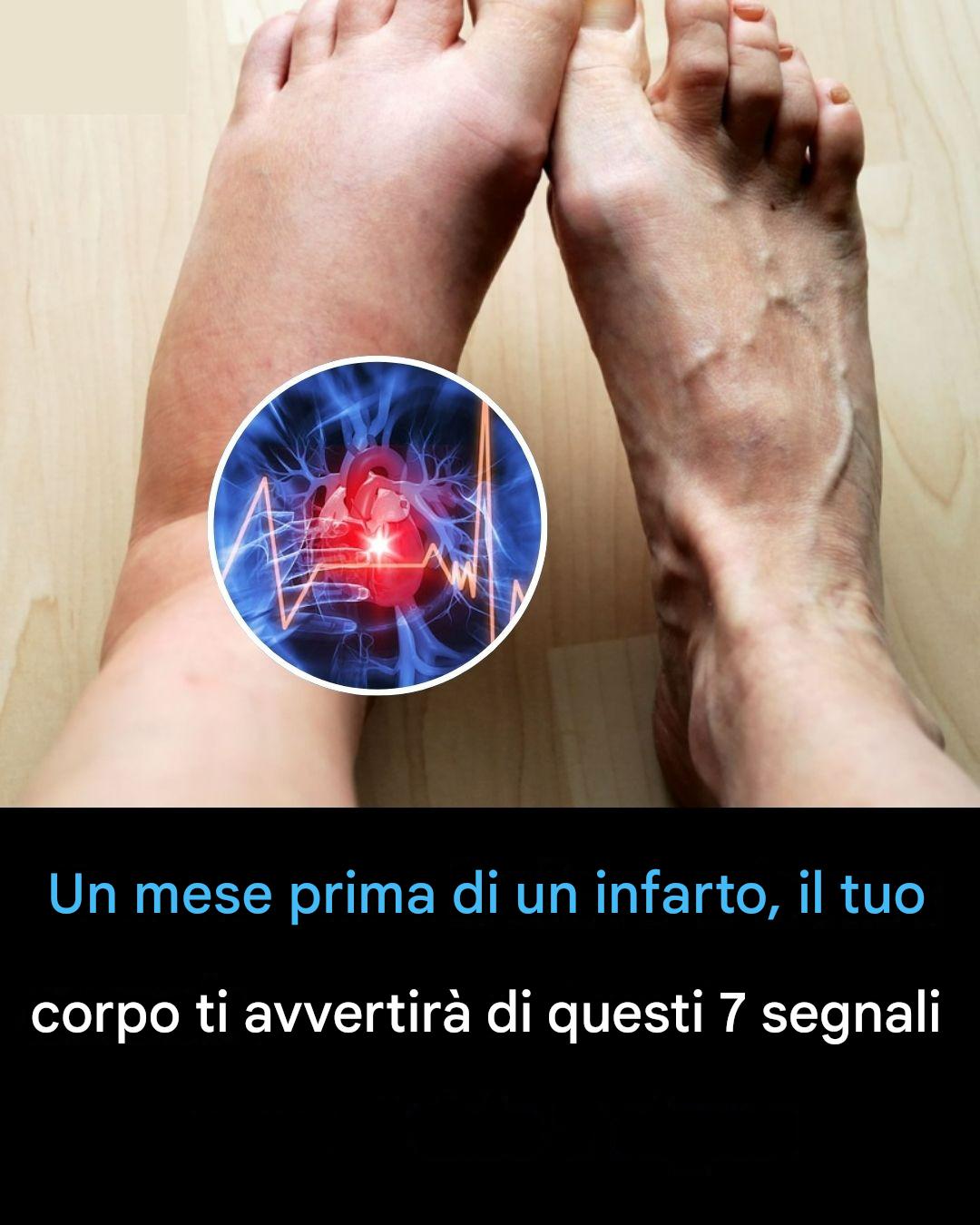
🚩I 7 segnali d'allarme silenziosi (sostenuti dai cardiologi)
1. Stanchezza inspiegabile: il primo segno precoce (soprattutto nelle donne)
Sei esausto, non per l'esercizio fisico, non per lo stress, ma senza alcun motivo.
Ti senti esausto dopo un'attività leggera (o nessuna attività)
Dura giorni o settimane
Hai bisogno di fare un pisolino solo per arrivare a fine giornata
📊Uno studio fondamentale pubblicato sulla rivista Circulation ha scoperto che il 70% delle donne ha segnalato una stanchezza insolita settimane prima di un infarto.
✅Non ignorarlo.
Non si tratta semplicemente di "stanchezza".
Potrebbe essere il tuo cuore che fa fatica a pompare.
2. Disagio al petto: non sempre dolore
Dimenticate il mito del “dolore al petto schiacciante”.
Most heart attacks don’t feel like a sledgehammer.
They feel like:
A heavy pressure or squeezing in the center of the chest
A dull ache or burning
A fullness — like you didn’t finish your meal
Comes and goes over minutes
💡 It may not go away with rest — and it’s not relieved by antacids.
And here’s the kicker:
It can happen without any chest pain at all.
3. Shortness of Breath – Even at Rest
You’re winded — not from running, but from walking to the mailbox, climbing stairs, or even lying down.
You feel like you can’t catch your breath
It gets worse with activity
May happen without chest pain
This is a major red flag — especially if it’s new or worsening.
4. Pain in the Arm, Neck, Jaw, or Back
Heart pain doesn’t always stay in the heart.
It radiates — often to:
Left arm (most common)
Right arm
Neck
Jaw (especially in women)
Upper back or shoulders
💡 Jaw pain during activity? Don’t assume it’s dental.
It could be cardiac.
Per continuare a leggere, clicca su ( SUCCESSIVA 》) qui sotto!