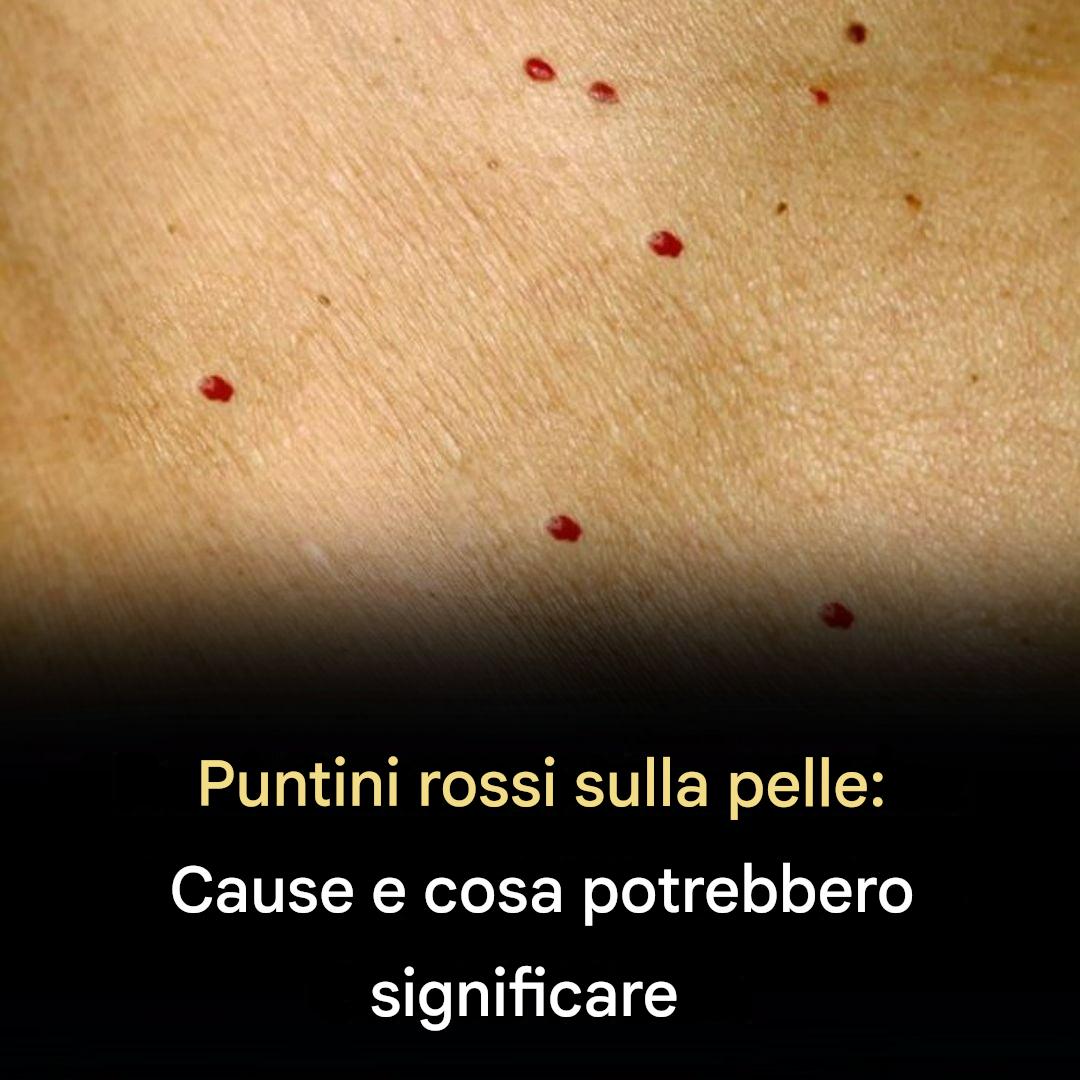
Caratteristiche comuni:
✅Misurare
Precisione di pochi millimetri
✅Colore
Rosso brillante, rosso scuro o viola
✅Struttura
Piatto o leggermente rialzato
✅Sensazione
Di solito indolore e non pruriginoso
Possono comparire ovunque: braccia, busto, gambe, viso e diventano più comuni con l'età.
Analizziamo nel dettaglio cosa potrebbero significare.
🔬11 possibili cause dei puntini rossi sulla pelle
1. Angiomi ciliegia (macchie di Campbell de Morgan)
Cosa sono: piccole protuberanze rosso vivo causate da gruppi di vasi sanguigni
Chi li contrae: la maggior parte degli adulti sopra i 30 anni, aumentano con l'età
Dove: tronco, braccia, spalle
Sono pericolosi? ❌No, sono completamente benigni.
Trattamento: non necessario, rimuovere solo per motivi estetici
✅Considerateli come dei "nei di bellezza" per i vostri vasi sanguigni.
2. Petecchie (piccoli capillari rotti)
What they are: Pinpoint red or purple spots from burst capillaries
Causes:
Straining (coughing, vomiting, childbirth)
Injury or pressure (tight clothing, vigorous massage)
Infections (strep, meningitis)
Low platelet count (thrombocytopenia)
Clue: Don’t fade when pressed (use a glass test)
When to worry: If they spread, don’t fade, or come with fever or fatigue
⚠️ Serious if paired with bruising, nosebleeds, or illness.
3. Spider Angiomas (Telangiectasias)
What they are: A central red dot with thin red lines radiating out — like a spider
Causes:
Sun damage
Hormonal changes (pregnancy, birth control)
Liver disease (cirrhosis)
When to check: If you have multiple spider veins + fatigue, jaundice, or swelling
✅ One or two? Likely harmless. Widespread? Worth a liver check.
4. Heat Rash (Miliaria)
What it is: Tiny red bumps from blocked sweat ducts
Where: Neck, chest, underarms — in hot, sweaty areas
Who: Babies, active adults, people in humid climates
Treatment: Cool down, wear breathable clothes
✅ Goes away on its own in a few days.
5. Allergic Reaction or Hives (Urticaria)
What it is: Red, raised, itchy bumps
Triggers: Foods, medications, insect bites, stress
Clue: They blanch (turn white) when pressed and move around
Duration: Come and go within hours or days
✅ Treat with antihistamines — see a doctor if breathing is affected.
6. Keratosis Pilaris (“Chicken Skin”)
What it is: Rough, red or flesh-colored bumps on arms, thighs, cheeks
Cause: Keratin buildup clogging hair follicles
Who: Common in teens and people with dry skin or eczema
Treatment: Moisturizers with lactic acid or urea
✅ Harmless — but can be improved with skincare.
7. Insect Bites (Mosquitoes, Fleas, Bed Bugs)
What they are: Red, itchy bumps — often in clusters or lines
Clue: Appear overnight, especially on exposed skin
Treatment: Anti-itch cream, antihistamines
✅ Rule out infestations if bites are recurring.
8. Fungal Infections (Ringworm, Tinea)
What it is: Red, circular, scaly patches — may have a raised edge
Misnomer: Not caused by worms
Treatment: Antifungal creams (clotrimazole, terbinafine)
✅ Spreads easily — treat early.
9. Autoimmune Conditions (Lupus, Vasculitis)
What it is: Red dots from inflamed blood vessels
Clue: Come with other symptoms — joint pain, fatigue, fever
Diagnosis: Blood tests (ANA, CRP, ESR)
⚠️ Rare but serious — needs medical evaluation.
10. Medication Side Effects
Drugs that can cause red dots:
Blood thinners (warfarin, aspirin) → petechiae
Antibiotics, NSAIDs → allergic rashes
Chemotherapy → capillary fragility
Action: Review meds with your doctor — don’t stop without advice
11. Serious Blood or Systemic Conditions (Rare)
Leukemia
Petechiae + fatigue, bruising, fever, weight loss
Vasculitis
Red dots + joint pain, nerve issues, organ involvement
Sepsis
Widespread petechiae + high fever, confusion, low blood pressure
✅ These are rare — but if red dots come with severe symptoms, seek emergency care.
🚨 When to See a Doctor
Most red dots are nothing to worry about — but don’t ignore these red flags:
Crème fraîche
✅ Red dots that
non sbiadiscono quando vengono premuti
Potrebbero essere petecchie dovute a piastrine basse o infezione
✅
Si sta diffondendo rapidamente
o diventando più scuro
Può segnalare un'infezione o un disturbo del sangue
✅
Febbre, stanchezza o lividi inspiegabili
Potrebbe indicare un problema sistemico
✅
Sanguinamento delle gengive o epistassi
Suggerisce un problema di coagulazione
✅
Segni di malattia del fegato
(ittero, gonfiore, urine scure)
Possibile collegamento con gli angiomi a ragno
👉In caso di dubbio, fate un controllo. Un semplice esame del sangue o una visita dermatologica possono escludere cause gravi.
🛡️Come prendersi cura della propria pelle
✅
Non graffiare o stuzzicare
Previene infezioni e cicatrici
✅
Utilizzare prodotti per la cura della pelle delicati
Evitare saponi aggressivi e prodotti a base di alcol
✅
Proteggere dal sole
Previene le vene varicose e l'invecchiamento della pelle
✅
Rimani idratato
Supporta la salute della pelle e dei vasi sanguigni
✅
Monitorare i cambiamenti
Scatta foto per tracciare punti nuovi o in crescita
💬Considerazioni finali: a volte il punto più piccolo è il segnale più forte
Ignoriamo i punti rossi.
Diamo la colpa all'invecchiamento.
Diciamo: "È solo uno sfogo cutaneo".
Ma a volte la differenza tra “innocuo” e “aiuto necessario”…
Non è nel colore.
È nello schema.
Quindi, se noti puntini rossi nuovi, diffusi o insoliti, soprattutto se associati ad altri sintomi...
Niente panico.
Ma agisci.
Perché a volte i messaggi più importanti sono contenuti nei pacchetti più piccoli.
E una volta che inizi a prestare attenzione?
Potresti accorgerti di qualcosa prima che la situazione diventi seria.